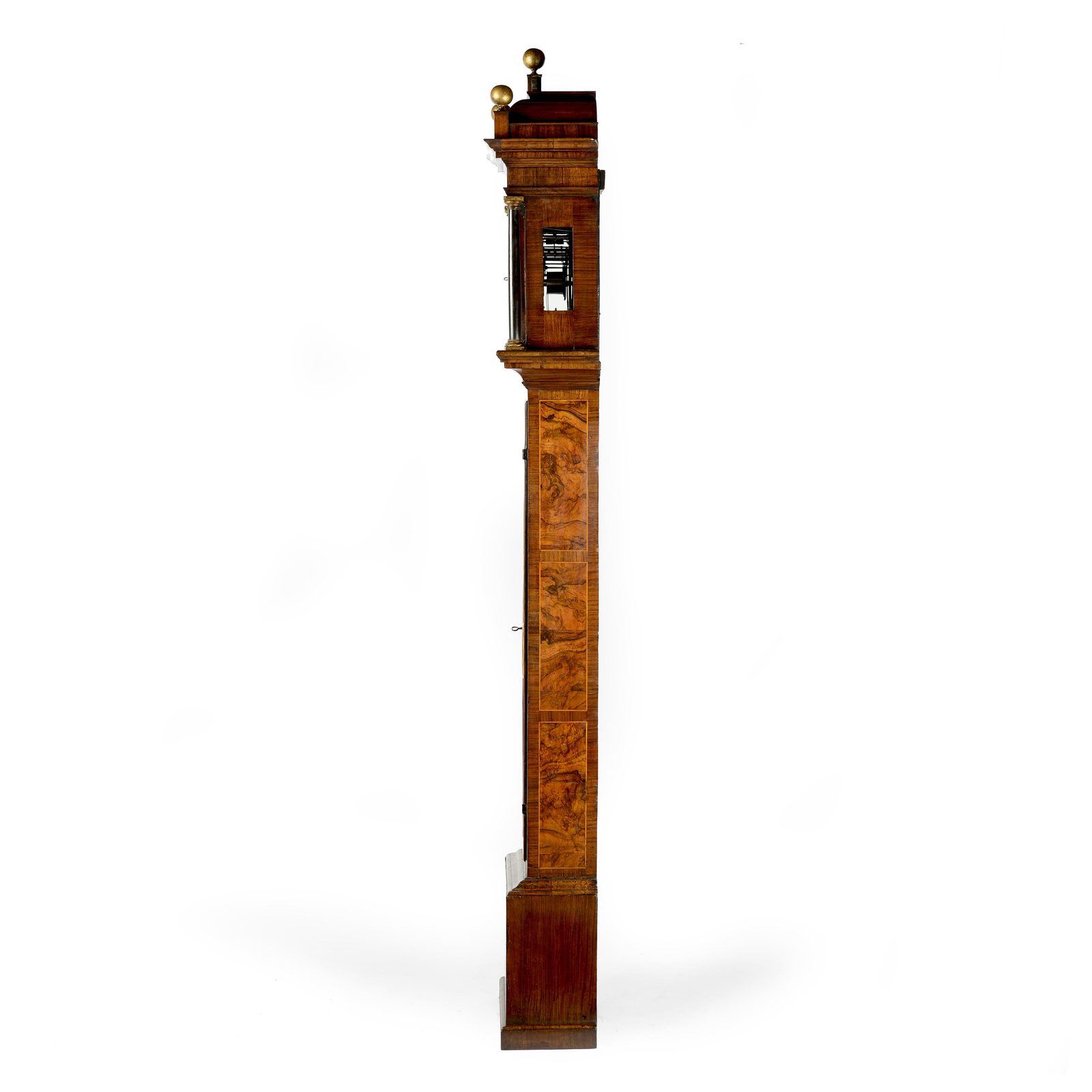
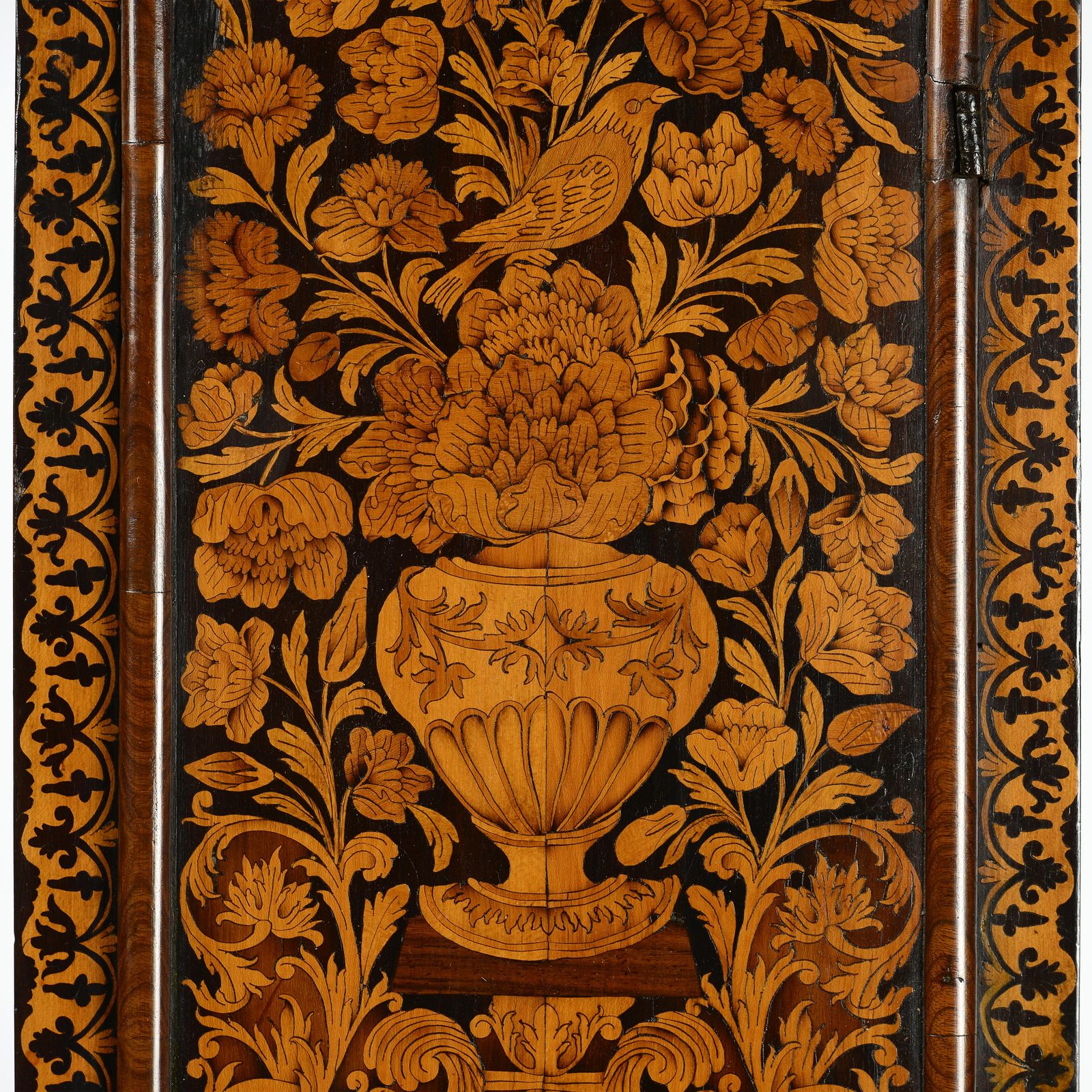
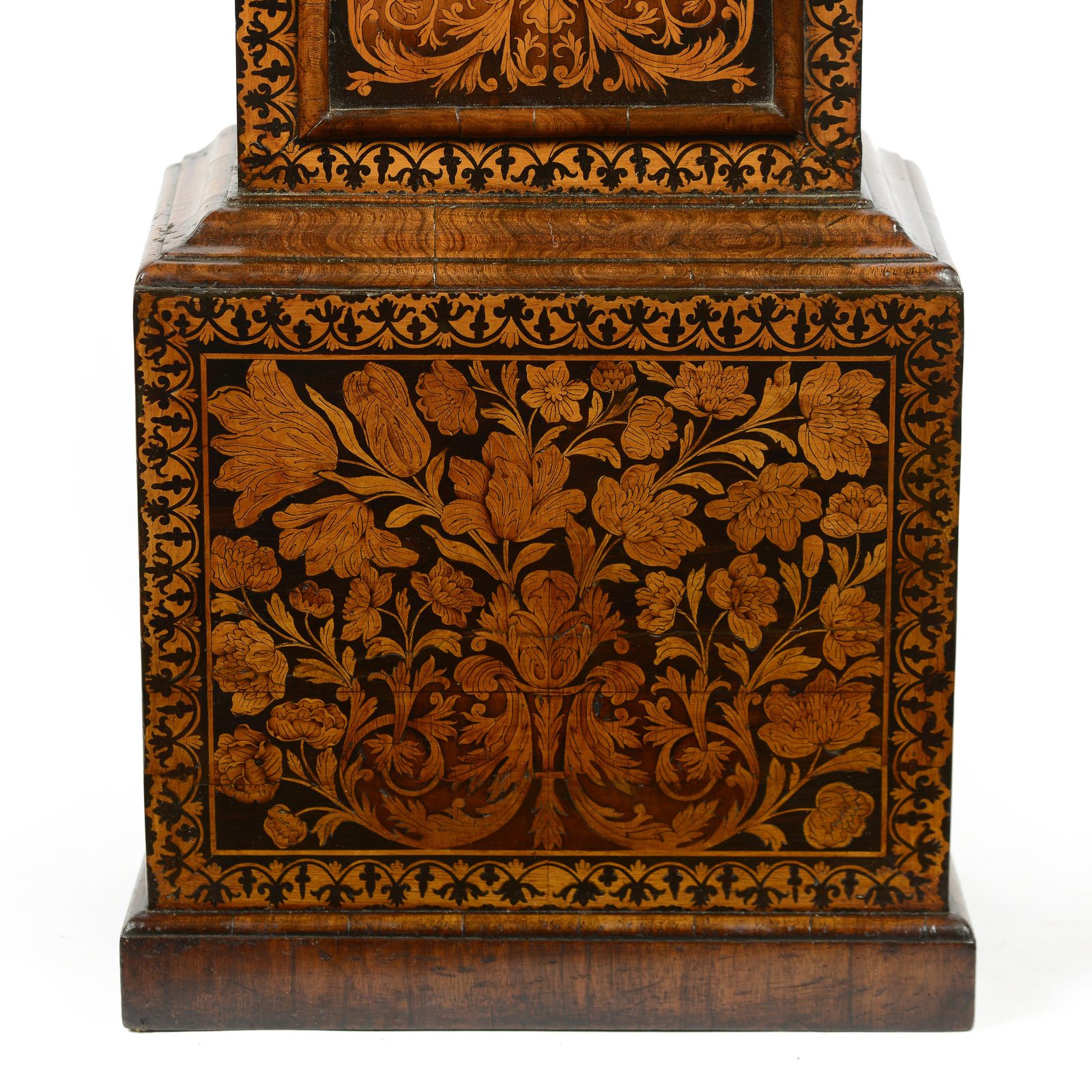
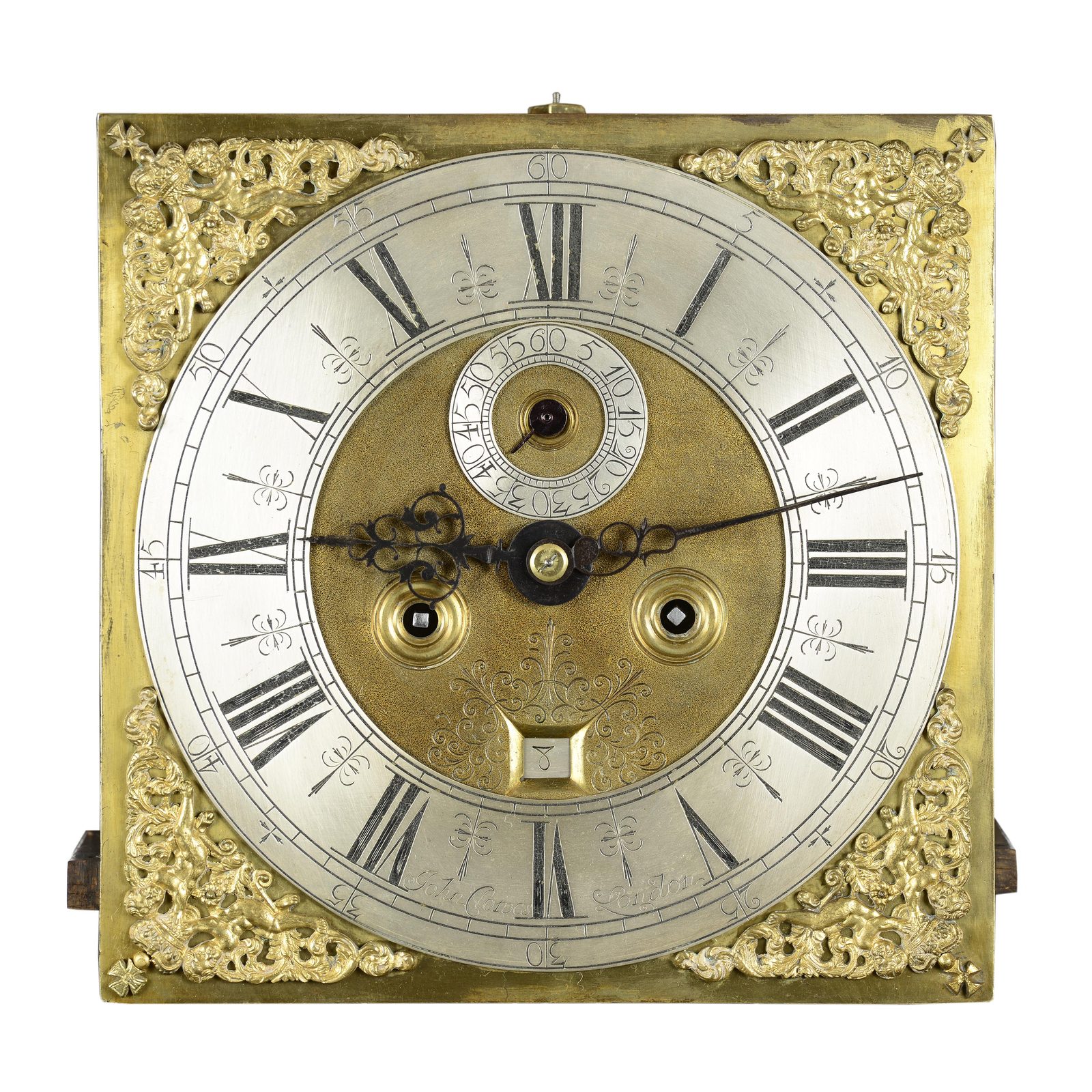
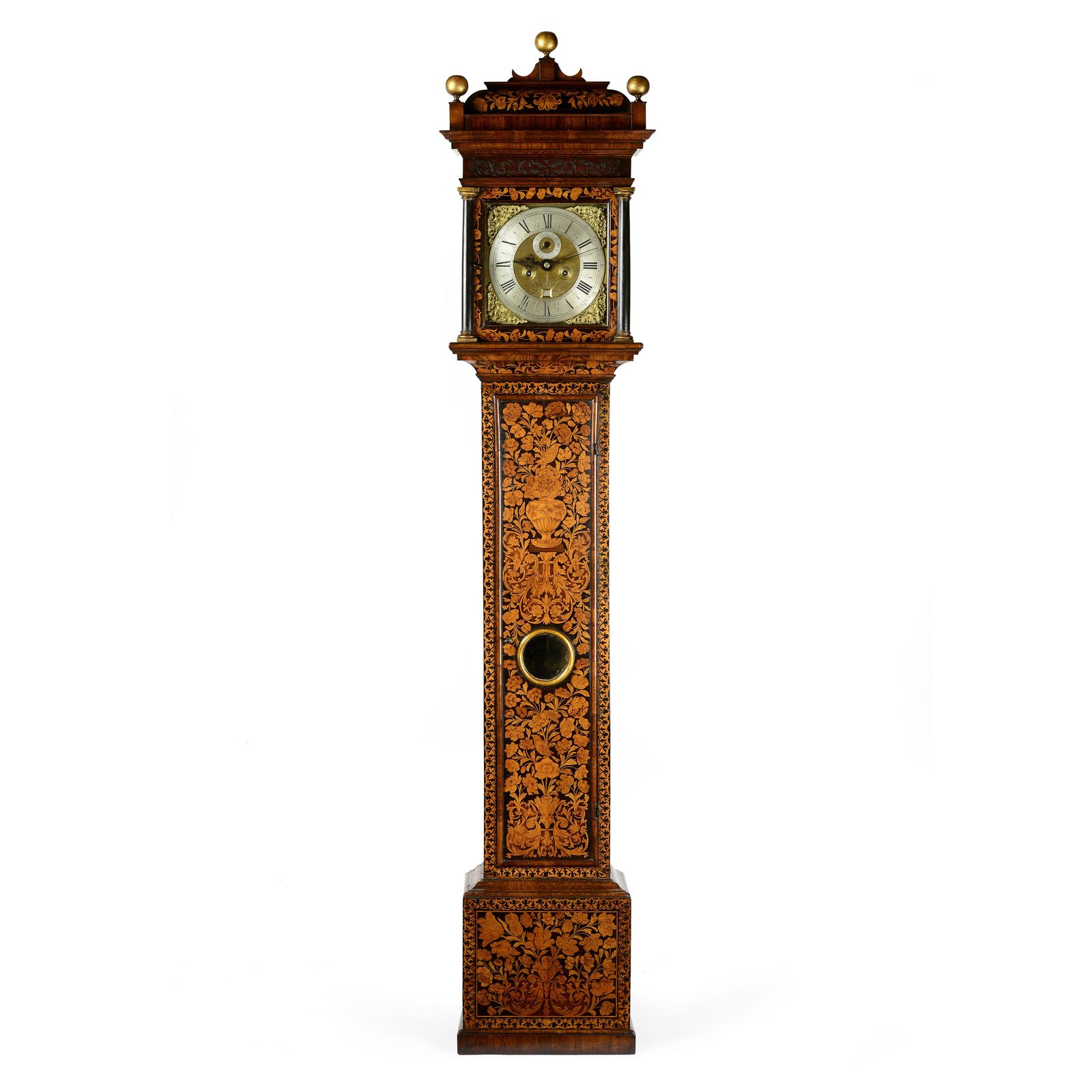
William & Mary walnut and floral marquetry longcase clock John Clowes, London
£37,900
Stock no. 2229 · Free delivery worldwide on online orders
- Free delivery by specialist art courier, insured in transit
- 14 days to return it if it isn’t right for you
- Comes with a BADA Certificate of Provenance and a valuation for insurance
- View by appointment in Wells, Somerset
- Maker
- John Clowes, London
- Date
- English, William & Mary, circa 1690
- Origin
- England
- Dimensions
- Height 91.00 inches (231.14cm) Width 18.50 inches (46.99cm) Depth 10.00 inches (25.40cm)
- Signed
- John Clowes, London to lower edge of chapter ring
- Condition
- Excellent. The movement has been fully overhauled and serviced. Base apparently original. Minor restorations to marquetry, the plinth and caddy restored.
- Provenance
- Private collection in Hertfordshire
Description
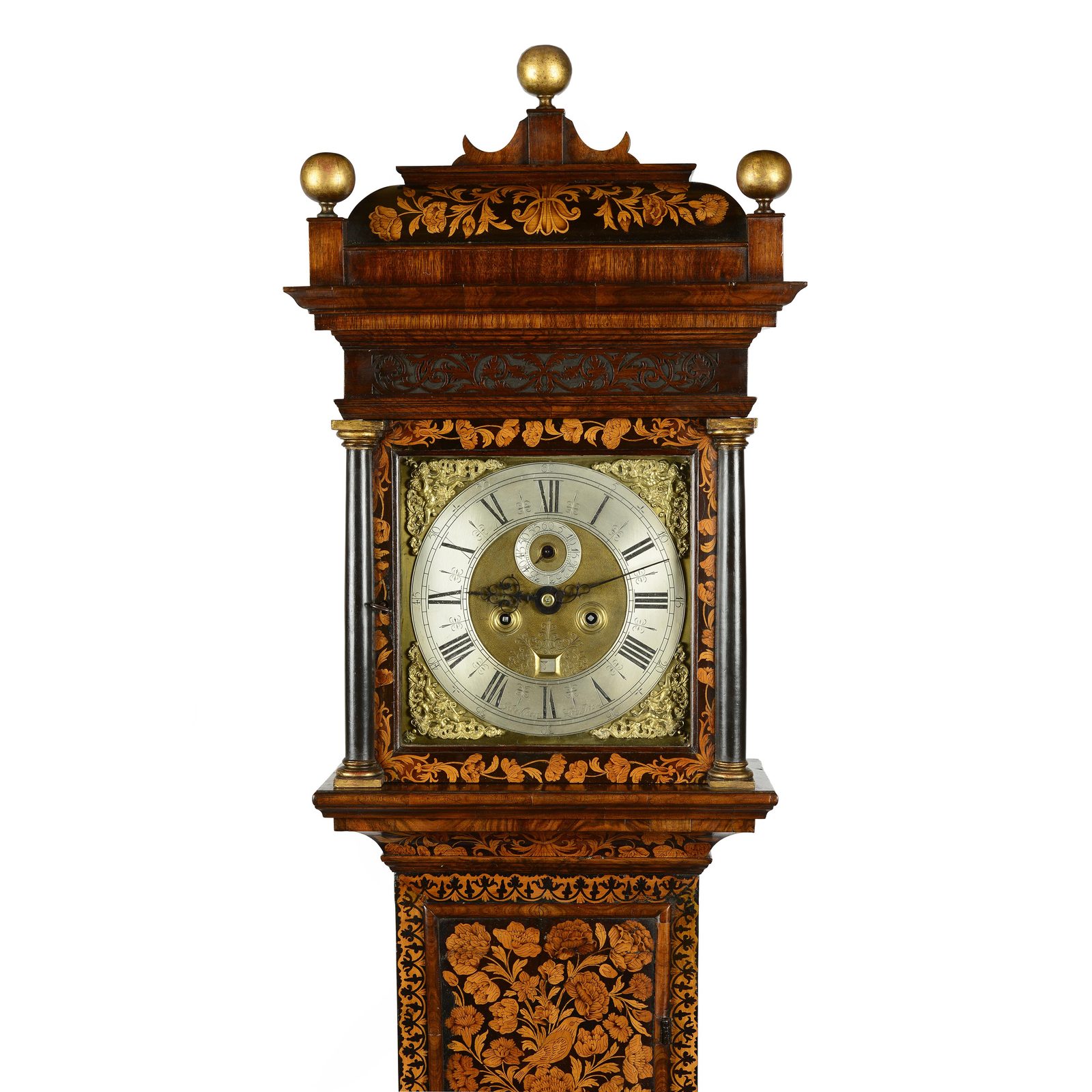
A William & Mary walnut and floral marquetry longcase clock by John Clowes, London. The five finned pillar outside count wheel, bell striking movement with 11 inch square brass dial with subsidiary seconds dial, ringed winding holes and scroll engraved calendar aperture to the matted centre within applied silvered Roman numeral chapter ring with stylised sword hilt half hour markers, Arabic five minutes to narrow outer track and signed John Clowes, London to lower edge, the spandrels with twin cherub and crown spandrels with foliate scroll engraved decoration between.
The case with box upstand to the domed floral marquetry decorated caddy superstructure above moulded cornice and fretwork frieze over foliate trail inlaid hood door applied with three quarter columns to front angles, above convex inlaid throat moulding and marquetry framed door centred with a circular gilded ring lenticle and inlaid with marquetry panels decorated with vase and flower foliage on an ebonised ground within a walnut field, the sides with inset box strung figured walnut panels with crossbanded surrounds, on conforming marquetry panel fronted plinth base.
Further information
The first clock designs were very basic being made for a purpose and not to be decorative in any way. Over time the designs evolved and the first recognisable longcase clocks were being made by makers like Edward East and Fromanteel during the 1670s. These cases were very slender in design, made principally of oak or pine and veneered in fruitwood which was then ebonised to create a black polished finish. Almost all of these early clocks were of 30 hour duration but the 8 day and later month duration longcase clocks followed. There were even a very few that were of year duration. This clocks notable feature is the intricate and profuse use of marquetry all over the case. The quality of the work is exceptional in all respects and extends to areas like the door frame which are normally cross-banded in walnut.
John Clowes was born in 1651 and made a Freeman of the Clockmakers' Company January 1672/73, known as a great clockmaker. He became Assistant Warden in 1708 and was due to serve as Warden in 1713 but was unable. He never returned to the Court and it is believed he died in 1713/14. Amongst his apprentices were his son, John, and Francis Gregg. John is recorded as making "a rich pendulum weekly clock" for the king.
Order online
Buy this piece
We reserve it for you straight away and email to confirm. Within 2–3 working days we’ll be in touch to arrange payment and delivery.
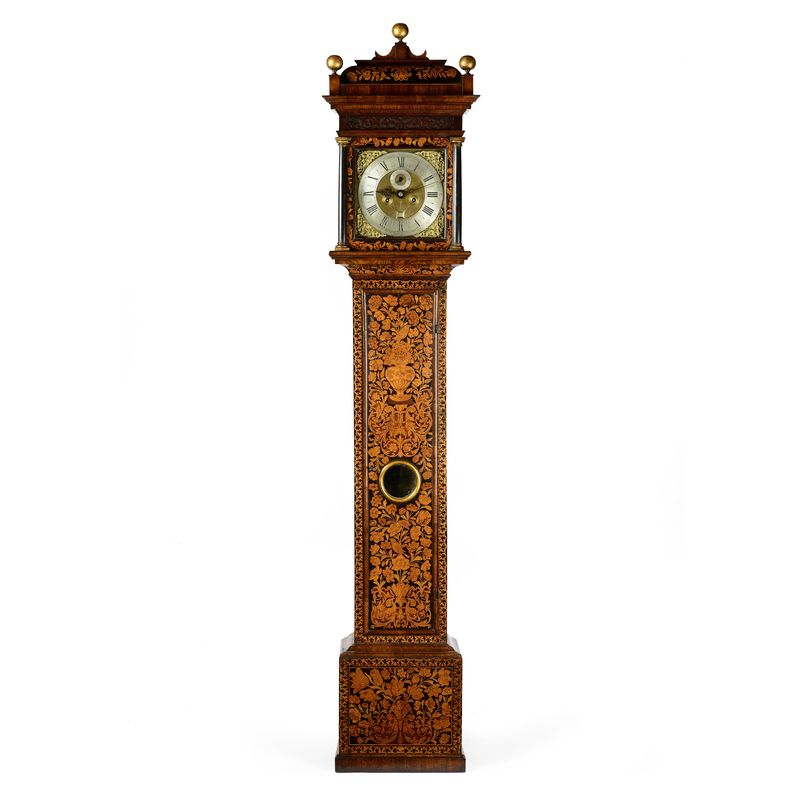
William & Mary walnut and floral marquetry longcase clock John Clowes, London
Stock no. 2229
£37,900 · free delivery
Ask about this piece
More photos, measurements, condition, viewing — we’re happy to help.
You may also like
All furniture